
Milton Neighbors by Block
Public sources answer different questions about Milton neighbors. MapsOnline identifies adjacent parcels and map attributes. The assessor supplies a parcel owner, situs, mailing clue, value, and characteristics. Norfolk land records document deeds, mortgages, liens, plans, and the party chain. A local voter-file request can address registered voters under the state’s local-access rules, but it does not produce a universal household roster. Historical directories and maps add an older block view. Treat each result as an owner, voter, parcel, or historic occupant record, not as proof of every person who lives nearby.
| Milton block source | What it shows around an address | Access |
|---|---|---|
| Milton MapsOnline Find Abutters | Immediate abutters, chosen-distance parcels, map and list results | Free Milton map; certified notice needs an Assessor form |
| Milton Assessor parcel search | Owner, situs or mailing clue, exemption, value, and parcel characteristics | Milton portal with office fallback |
| Milton Norfolk Registry route | Deeds, mortgages, liens, plans, dates, and parties for a parcel | Free Milton research; clean or certified copies have a fee |
| Milton local voter file | Allowed registered-voter fields at local addresses | Milton Clerk request; statewide registry is closed |
| Milton 1906 directory and maps | Historic occupants, occupations, cross-street clues, and lot context | Milton Library, archives, or digitized collections |
| Milton civic records | Public projects, meeting participation, and neighborhood identity | Milton agendas, boards, and historical resources |
For a precise Milton block question, begin with the map and record the focal parcel ID before reading names. That ID keeps rear lots, condominiums, shared drives, and similar street addresses from being confused. For a complete named-road record chain, the Milton by-street directory follows the broader street sequence.
Map Milton Neighbors with Abutters
Milton’s official GIS page links to MapsOnline, a public mapper that combines Assessing, DPW, Engineering, Planning, and aerial-imagery data. Use Find Properties by address, owner name, or parcel ID, then use Identify to confirm the returned parcel attributes. Find Abutters works from a found property or a parcel selected with Identify. Its default distance is zero, and the documented tool can also search at a chosen distance. Results appear as both a map and a list.
Start by clearing any old selection with the Eraser tool. Select the focal Milton parcel, run Find Abutters, and inspect front, side, rear, and corner-touching parcels individually. The Milton list gives a practical capture order, while Identify returns attributes for each result. Use Layers to understand Milton parcel lines, planning overlays, or aerial context, but do not mistake every layer or map edge for a legal boundary. The Norfolk Registry remains the Milton land-record custodian for title and deed continuity.
Note: Turn off popup blocking before using Milton MapsOnline because the official help warns that the map’s tools and results may otherwise be interrupted.
Defining a Milton Neighbor Block
A zero-distance abutter result is not always the same as a neighborhood block. It can include a rear lot, a corner touch, a parcel across a private way, or a condominium parcel. Decide whether the Milton question means immediate GIS abutters, all parcels within a measured buffer, or addresses between two cross streets. State that method beside any notes. It keeps a parcel-based result from being overstated as a social or household map.
- Focal parcel
- The parcel selected first, usually by its situs address, owner name, or assessor identifier.
- Abutter
- A parcel returned by the map as touching or falling within the chosen distance of the focal property.
- Situs address
- The physical Milton location of a parcel, which may differ from an owner’s mailing address.
- Certified abutters list
- The formal Town notice list that must include the Assessor-certified form, not just a GIS output.
Milton expressly requires a Certified Abutters List Form from the Assessor in addition to a GIS-generated list for legal notification. The public map is a research aid. It does not issue the Town’s certified notice list and should not be used as a substitute for it.
Map a Milton Block Through Parcels
Work outward from the selected address in a fixed sequence. This Milton method separates the map’s nearby-parcel result from the legal documents and local records that may describe a person’s connection to each lot. Preserve the date of every Milton result, because a current owner, a historic occupant, and a current voter can be different people.
- Enter the Milton address, owner, or parcel ID in MapsOnline Find Properties. Use Identify to confirm that the selected parcel is the intended lot.
- Run Milton Find Abutters at zero distance for immediate parcels, or document a wider measured distance. Review both the map and list, then click each result with Identify.
- Record the Milton parcel ID, owner field, situs, mailing clue, and map layer context. A mailing address is a correspondence clue, not a residence finding.
- For a Milton parcel history, search the Norfolk Registry by party, address where available, and legal description. For a registered parcel, repeat the search in the separate Land Court system.
- Use a local voter request or a historical directory only for the different question each source can answer. Keep protected or absent names unqualified.
The Registry’s combined address index is strongest from 2003 because property addresses were entered for applicable documents from that point. Older Milton parcel work often has to proceed from a current owner to a deed, seller or grantor name, legal description, plan, and prior instrument. That makes a block search a dated evidence trail, not a one-click list.
Milton Voter Files Near an Address
Milton neighbors who are registered voters may appear in a local public list through the Town Clerk. Massachusetts guidance identifies local public fields including name, address, party, date of birth, active or inactive status, and voter ID. Some additional local-file information can be requested, including registration date, inactivity date, mailing address, prior changes, and participation history. A request should name the municipality, fields, cycle or date, format, and whether inspection or copies are wanted. The state’s individual status page is not a block-search screen.
The Commonwealth’s voter-information guidance also makes the limit clear: the statewide central registry is not public under M.G.L. c. 51, § 47C. Confidential voters, minors, phone and email information, veteran status, permanent absentee details, and other protected items are withheld. Ballot choice is not public. A public list can help answer a narrow Milton registration question, never every question about neighbors.
A screenshot of the Massachusetts voter-information access page documents the distinction between local requestable records and the protected statewide file.
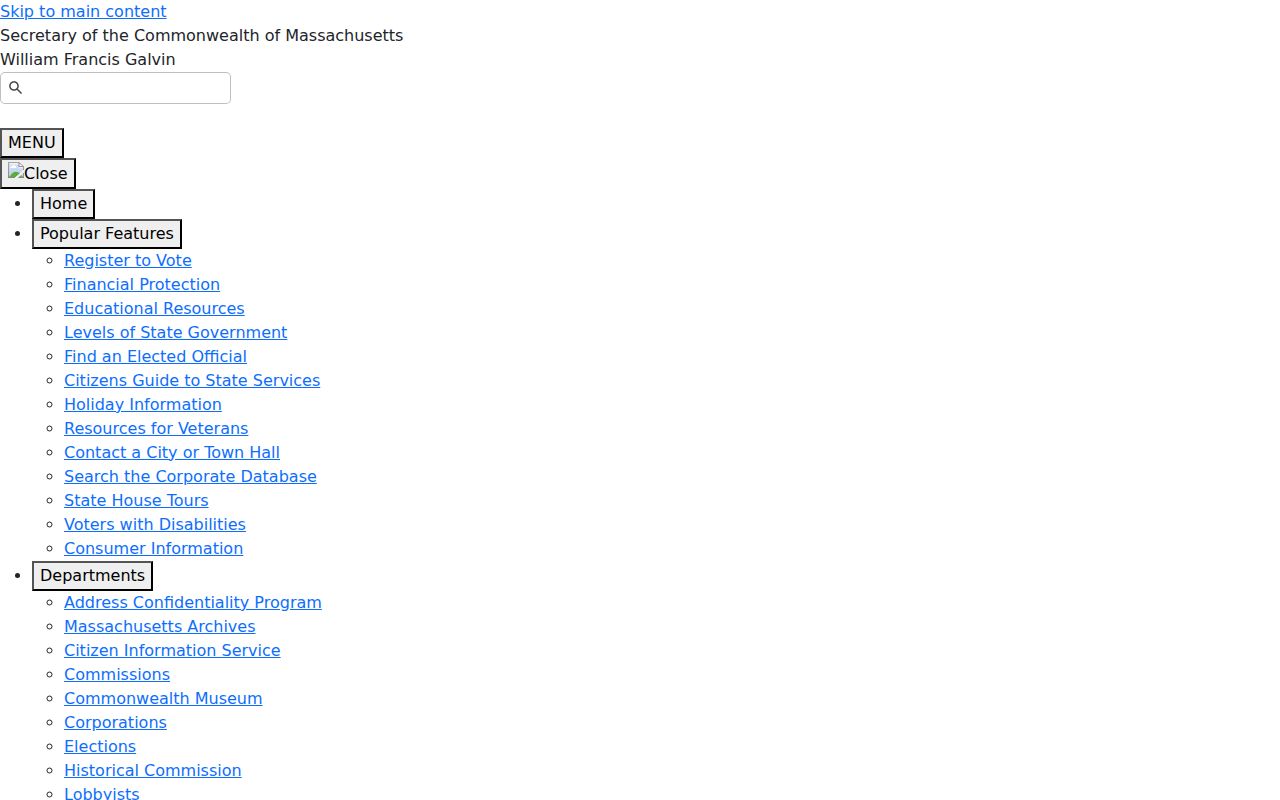
The access rules explain why a Milton local-file request must be specific and why a missing name cannot be treated as a definitive neighbor result.
Milton Neighborhood Directory Gap
Milton’s official material identifies places such as Milton Centre, Milton Hill, Brush Hill, Scott’s Woods, Railway Village or East Milton, and Milton Village. These Milton labels help interpret a historic address or civic record, but they are not proof that a person belongs to a current group. Research found a 2025 Milton Planning and Community Development reference to a Coalition of Neighborhood Associations and a directory project. It did not locate a current public association-by-association membership or contact roster.
| Milton Coalition of Neighborhood Associations | Referenced in 2025 Milton Planning and community materials as an information-sharing umbrella; current member list not located. |
|---|---|
| West Milton Neighborhood Association | Named in a 2025 Milton community-vision record connected with Brush Hill Road and Pagoda Circle; public roster not located. |
| Milton Railway Village and East Milton | Historic district and Milton Planning identity tied to Adams Street and the Granite Railway; no civic-directory evidence located. |
| Milton Village committee activity | Milton agendas and a Notify Me category document public committee activity, not a resident roster. |
For a block’s civic context, use Milton Planning and Community Development, meeting agendas, Historical Commission surveys, Library archive material, and Historical Society collections. Those sources can connect a place to a project or history. They do not supply a complete neighbor directory, so the current association page should be rechecked before relying on it for contact information.
Historic Milton Neighbors and Place Names
Historic source work can make a Milton block more legible without pretending it shows a modern household. Read a 1906 street-list page for nearby entries and its “near,” “opposite,” or corner clues. Then compare the 1906 map with the 1896 and 1905 atlases, 1901-1949 Sanborn material, and Registry plans. Early addresses may be descriptive because the 1906 directory says street numbering was imminent. A later numbered address can therefore need a map, plan, and deed bridge before it is matched to an earlier entry.
Railway Village along Adams Street and Granite Avenue is an especially useful Milton geography clue. Town historical materials place the Granite Railway’s 1826 route between Quincy quarries and the Neponset River, and the crossing shaped Railway Village. Elsewhere, Milton Centre, Milton Hill, Brush Hill, Scott’s Woods, and Lower Mills may appear as section labels rather than a modern postal address. Record the place label and date before normalizing a name or street.
The Milton Historical Commission keeps survey information that can add architectural and district context to a parcel trail.
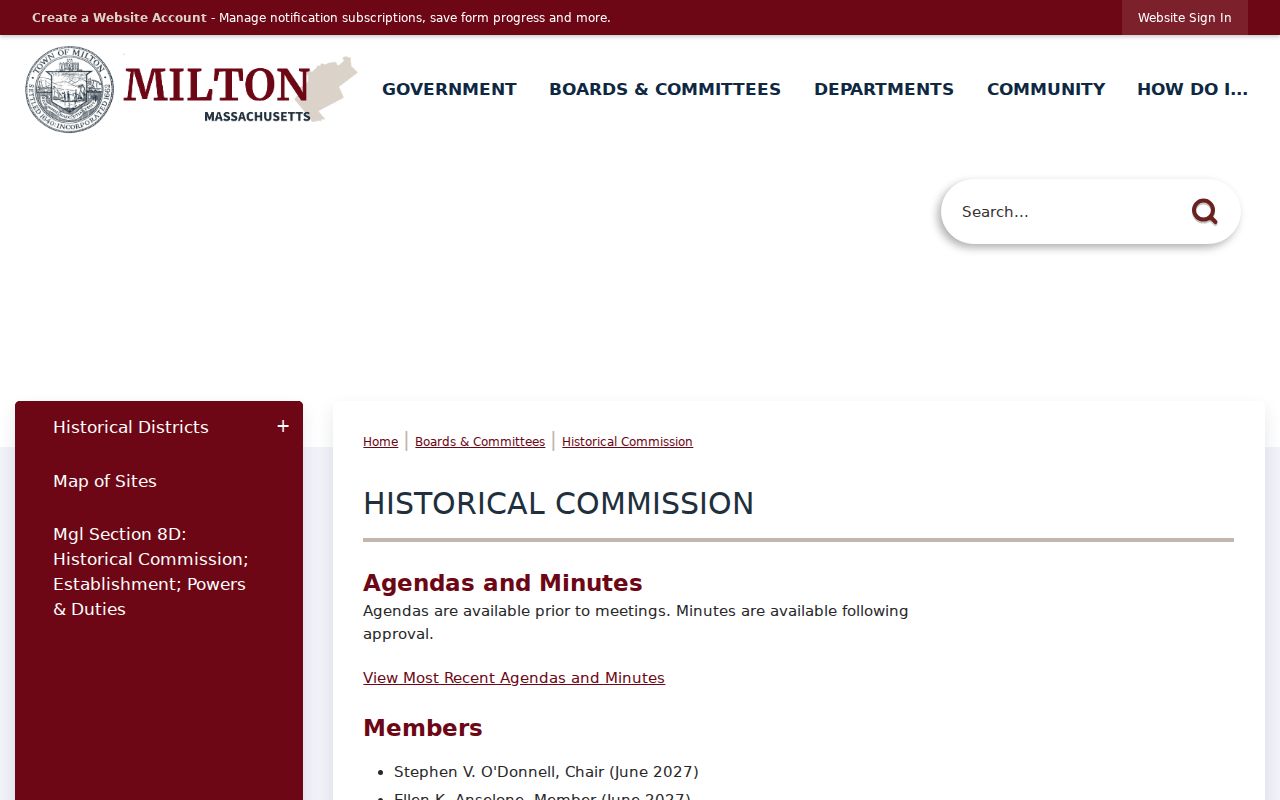
Historical survey context can explain why nearby Milton parcels share an era or district, but it does not establish present-day occupancy.
Privacy Limits for Milton Neighbors
Public parcel and voter records leave important things out. Some people at an address, non-registered household members, utility and delivery customers, RMV addresses, children, and minors are not a public block list. Massachusetts Address Confidentiality Program participants and confidential voters are protected by design. Court impoundment and protective-order rules can also mask addresses. A missing name may mean a person is protected, not that the person has no Milton connection.
When an address needs correction or safety protection, contact the agency that holds the particular record. A deed or court filing can have its own redaction, impoundment, or correction process; it cannot be resolved by a general request to remove a name from every record. Do not send a confidential address by ordinary email or attach unnecessary identity papers. The Commonwealth’s ACP route is designed to prevent a public search from disclosing the actual address.
Lawful use. Use Milton neighbor records for personal, lawful research, civic context, and reconnection. Do not use any result to stalk, harass, intimidate, or harm another person.
Comparing Milton Neighbor Sources
Official sources and commercial neighbor tools serve different purposes. A Milton map, assessor record, Registry image, and Clerk-provided list identify the custodian and the field being reported. Compiled commercial results may merge adjacent addresses, retain an old owner, or connect an unrelated same-name person. Their data can be useful only as a lead to test against a dated public source. Keep the source link, parcel ID, case number, or document reference with each Milton finding.
| Official Milton source chain | Compiled neighbor category |
|---|---|
| Names the map, records office, document, and date behind a field | May combine fragments from different dates and sources |
| Separates owner, voter, party, and historic occupant roles | May blur people with similar names or nearby addresses |
| Provides an office for corrections, copies, and access limits | Cannot replace the underlying custodian record |
For Milton neighbors, the most reliable routine is address to parcel, parcel to adjacent lots, and each lot to its dated official record. Stop when the available source cannot answer the next question rather than filling the gap with an assumption.