
Milton Previous Residents Across Eras
Previous residents leave different traces in different periods. Start with the current Milton parcel and move back only after recording the parcel ID, situs address, owner, and legal description. The Norfolk Registry then supplies the legal ownership trail. Directories and census schedules add household evidence, while newspapers, cemetery material, obituaries, and probate files can explain a final move or death. Milton has no one public index that combines all of these sources, so a good address history preserves the source, date, and role for every name.
| Milton source | Years it covers | Where held | What it can show |
|---|---|---|---|
| Milton recorded-land index | 1793 onward | Norfolk Registry of Deeds | Deeds, parties, dates, book/page, images, and legal descriptions |
| Milton registered-land index | Online index from 1973; local system from 1901 | Norfolk Land Court district | Certificates, owners, plans, and encumbrance records |
| Milton directories | Selected 1885-1945; 1906 scan | State Library, archives, and Internet Archive | Occupants, occupations, addresses, boarders, and street listings |
| Milton federal census context | Released on the federal 72-year rule | National Archives and research repositories | Household snapshots by census date |
| Milton Library local history | Newspapers 1882-present; Sanborn maps 1901-1949 | Milton Public Library | Address context, notices, maps, cemetery material, and microfilm |
| Milton permit and town records | Current portal since 2023; older coverage not established | Milton Engineering or Town records request | Construction or alteration dates, applicant, and file context where available |
For a recent Milton sale, the Registry image and Milton assessor parcel are normally the first pair. For an early Milton address, the directory, atlas, and Sanborn route may need to come first because a modern number may not yet exist. The Milton fallback is not a generic search: contact the Assessor for parcel evidence, the Registry for the land chain, and Library Reference for a historical street page.
Starting a Milton Previous Resident Trail
Milton's Assessor's Property Records are the practical start for a present-day address. Search by owner name, street address, or parcel ID, then record the situs address, owner, mailing address, parcel reference, and any map or assessment link returned. Situs means the place where the parcel physically sits. A mailing address is where tax correspondence goes. They can differ, and neither one proves that every person who lived there is shown.
The Milton GIS page points to MapsOnline, where Find Properties accepts owner, parcel, or address input. Identify returns Milton parcel attributes, and aerial and municipal layers help distinguish an adjoining lot, a rear lot, or a shared driveway. The map is a navigation aid, not the legal source. Use the Milton parcel it identifies to make the deed search more precise.
Milton's MapsOnline help also documents Find Abutters, which returns a list and map at a zero-distance default or a chosen distance. That Milton tool may help establish which parcels were next to one another, but each Milton parcel must remain its own record.
Following Milton Deed Chains Backward
The Norfolk Registry research system is the legal-record spine for Milton past residents who owned property. Recorded Land uses the traditional book-and-page system and has computerized indexing from 1793. Registered Land is separate, certificate-centered, began locally in 1901, and has online indexes currently from 1973. Search both systems when a name search misses. A parcel can involve both recorded and registered land, so keep the results in separate columns.
- Pull the current Milton parcel, owner, and legal or parcel reference from the assessor and GIS records.
- Search the owner's purchase as a grantee in the Registry, using the address mode first when the document is recent.
- Open the image or abstract and record the Milton grantor, grantee, recording date, book/page or document number, legal description, plan reference, and related mortgage or discharge references.
- Search that seller as a grantee to find the earlier purchase, then repeat the same handoff.
- When the Milton address trail fades, use the party name, legal description, plan, street name, and spelling variants. Check Land Court certificates and encumbrances when the Milton parcel is registered.
- Grantor / grantee
- The grantor transfers an interest in the document; the grantee receives it. In a backward deed chain, the seller in one deed is often the buyer in the prior deed.
- Chain of title
- The documented sequence of transfers for a parcel. It traces legal interests, not every person who occupied the address.
- Legal description
- The deed's formal parcel wording, often tied to a lot, plan, bounds, or book/page reference. It can bridge a changed street number.
Free Norfolk Registry research images for Milton documents are marked “Not An Official Copy.” The Registry's copy instructions distinguish those research images from clean or certified copies. The published fee page says in-person copies are $1 per page and mail copies cost $2 for the first page plus $1 for each additional page per document. Use a marked image for Milton research, and ask for certification only when the original custodian's official copy is actually needed.
Milton Addresses Before 2003
Norfolk's combined address index is most useful from 2003 because Milton property addresses were entered on applicable documents from that point. Pre-2003 Milton address listings are very limited. That is an important Milton research boundary, not evidence that an older deed does not exist. Use the Milton current owner to find the modern deed, then follow grantor and grantee names, book/page references, plan records, and the legal description into earlier material.
Registry search mechanics support that wider method. Enter a name last name first, use fewer characters to broaden results, try a wildcard for spelling variants, and omit titles such as trustee or executor. The guide also notes that the regular weekday maintenance window is generally midnight to 3:00 a.m., with a longer Friday-night to Saturday-afternoon period. Retry a failed search outside that window before changing the research plan.
Note: A no-match in a narrow name search can reflect spelling, party role, land system, or a missing address field.
Milton Previous Residents Before Numbering
The 1906 Milton directory says that Milton streets were soon to be numbered and that a later volume would improve the street list. Earlier Milton entries can therefore rely on “near,” “opposite,” “off,” a corner, or a neighborhood name. A simple search for a modern number can miss the very household being sought. East Milton, Railway Village, Milton Centre, Milton Hill, Brush Hill, Scott's Woods, and Milton Village are useful geographic clues, but they are not always formal parcel identifiers.
Bridge old and current Milton address forms with the 1896 or 1905 atlas, the 1906 directory map, Sanborn sheets, a deed's legal description, and later numbered directories. The 1906 directory can also show a Milton home with a Boston work address. Keep the home line and work line separate. This small Milton quirk prevents an old business address from being mistaken for the place where a person lived.
Past Milton Households in Directories
Owners are only one part of the previous-resident trail. Historical directories can identify a householder, boarder, occupation, employer, residence clue, and nearby listed residents. The National Archives Massachusetts directory holdings list Milton volumes for 1921, 1924, 1926, 1929, 1932, and 1934. The State Library identifies selected Milton city-directory years from 1885 through 1945. Read the alphabetical entry and the residents-by-streets entry from the same Milton volume before connecting a person to a particular house.
The National Archives holdings page identifies the Milton directory run that can bracket a census year.
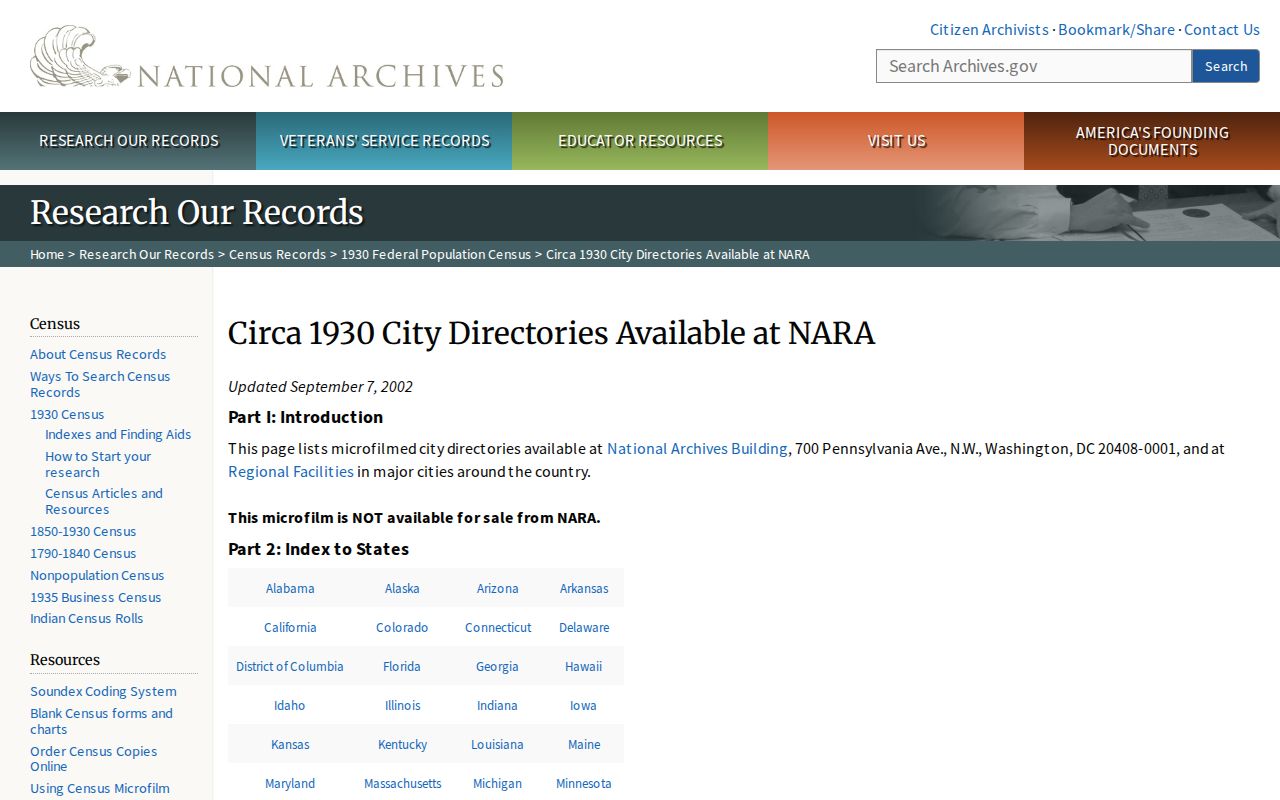
Using the available editions on both sides of a census year makes it easier to test an address change or a boarding notation.
- Start with the earliest directory entry that clearly matches the Milton address or descriptive location.
- Record its name, occupation, employer, h. or bds. marker, residence wording, and nearby street entries.
- Check the next available directory and the released federal census schedule closest to that date.
- Track surname variants, widow notation, boarding status, employer changes, and neighborhood labels as separate facts.
- Use a deed or assessor record to distinguish an occupant from an owner, then use obituary or probate evidence to close the household trail.
The full collection details and abbreviation guidance are on the Milton city-directory collections page. A current address-led search belongs on the Milton by-street page, where the modern parcel chain is kept separate from historical occupancy.
Milton Maps and House History
The Milton Public Library local-history collection supplies the most useful companions for a house trail: the 1896 and 1905 atlases, 1901-1949 Sanborn maps, newspaper microfilm, cemetery material, phone books, town reports, and the archives index. The Library asks for an advance appointment for deep local-history research. Ask Reference for the exact volume or map sheet rather than assuming each item is available online.
The Library of Congress confirms a 20-image 1923 Milton Sanborn set, including East Milton and Milton Centre. Sanborn maps can show building outline, size, construction, and use clues. They can date a structure's physical context, but they do not name every resident. Pair them with a directory, deed, or notice.
Milton Engineering migrated permit work to PermitEyes on October 1, 2023. The research found no verified public historical permit-results screen. For older permit files, use Inspectional Services or a focused Town records request and describe the address, date range, and record sought.
Milton Previous Residents: Trail Endpoints
Newspapers, obituaries, cemetery records, and probate files can explain the final entry in a Milton address history. Milton Library newspaper microfilm runs from Milton News in 1882 through current Milton Times coverage across the named titles. The Library also holds cemetery material, although an official complete public town interment search was not located. Treat an online memorial as a lead to verify with the cemetery or Library record.
For a Milton estate, will, guardianship, divorce, name change, or related court file, Norfolk Probate and Family Court at 35 Shawmut Road in Canton serves Milton. MassCourts and physical files or courthouse kiosks are different access routes. A docket is a court's list of case events, not the full official file. The court record can identify an heir or a date, but it should not be used to fill a Milton address gap without a second source.
Milton Previous Residents and Privacy
Use Milton previous-resident records for house history, family history, estate research, or personal civic curiosity. A missing name does not prove that no one lived there. Some people are absent from public sources because they did not own property, were not listed in a directory, were not registered locally, or were protected by confidentiality rules. The Massachusetts Address Confidentiality Program, confidential voter registration, court impoundment, sealed matters, and RMV restrictions can limit what appears.
Lawful use. Keep source roles and dates clear, verify with the custodian, and never use an address history to stalk, harass, or harm a living person.
Milton's Town Clerk is the Records Access Officer for a narrow local public-record request under the Massachusetts Public Records Law. The request should name the custodian, the record type, the time range, and the fields needed. This Milton route cannot override statutory confidentiality, but it is the verified fallback when a public record exists without an online index. For previous residents, it is also safer to document a confirmed record gap than to fill the gap with a guess.